
| Client | Canton de Vaud, represented by COPIL des Constructions Universitaires |
| Construction | Pragma Partenaires |
| Architecture | FHV Architectes |
| Planning | 2015 - 2019 |
| Realization | 2019 - 2027 |
| Status | Under construction |
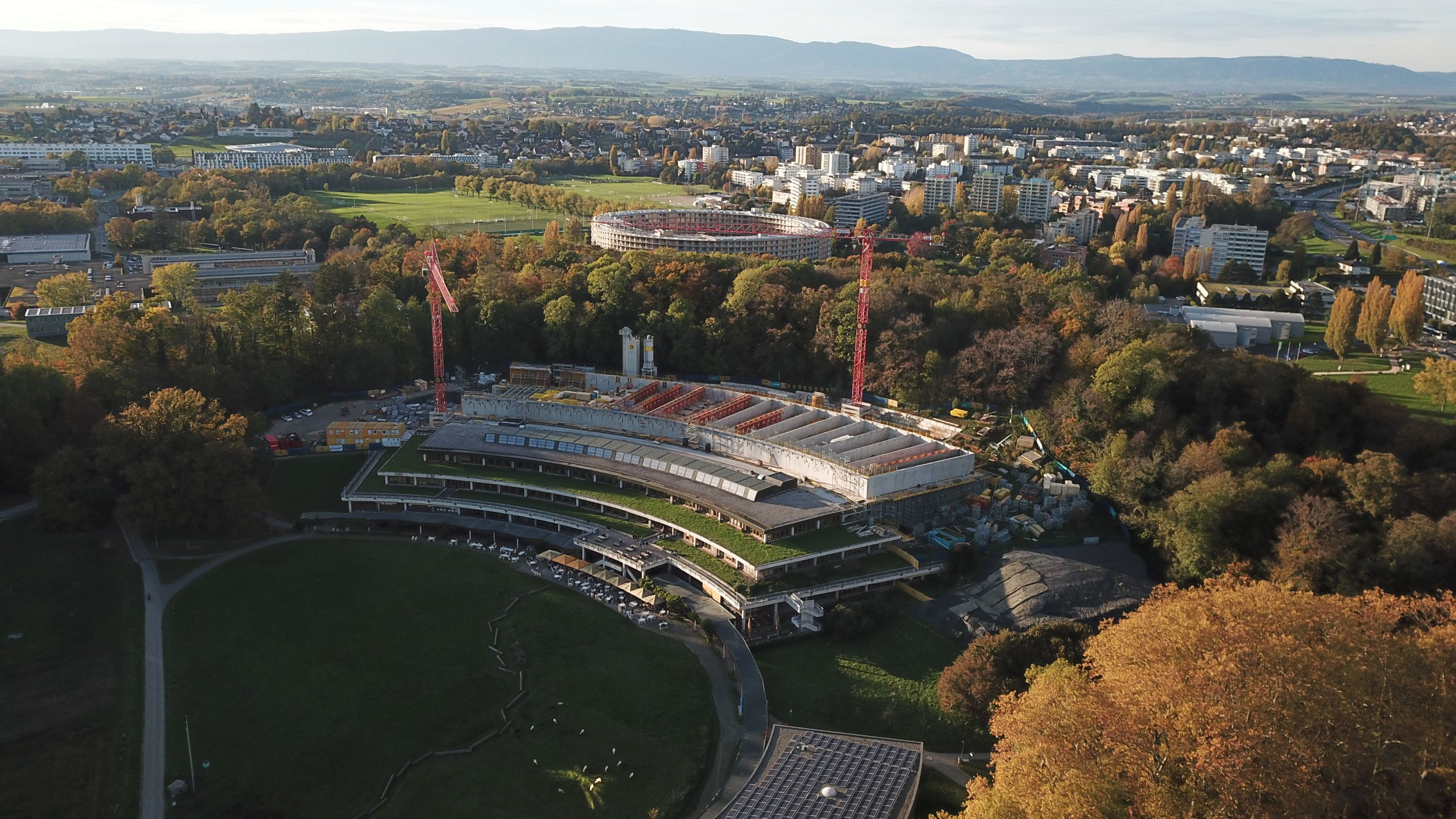
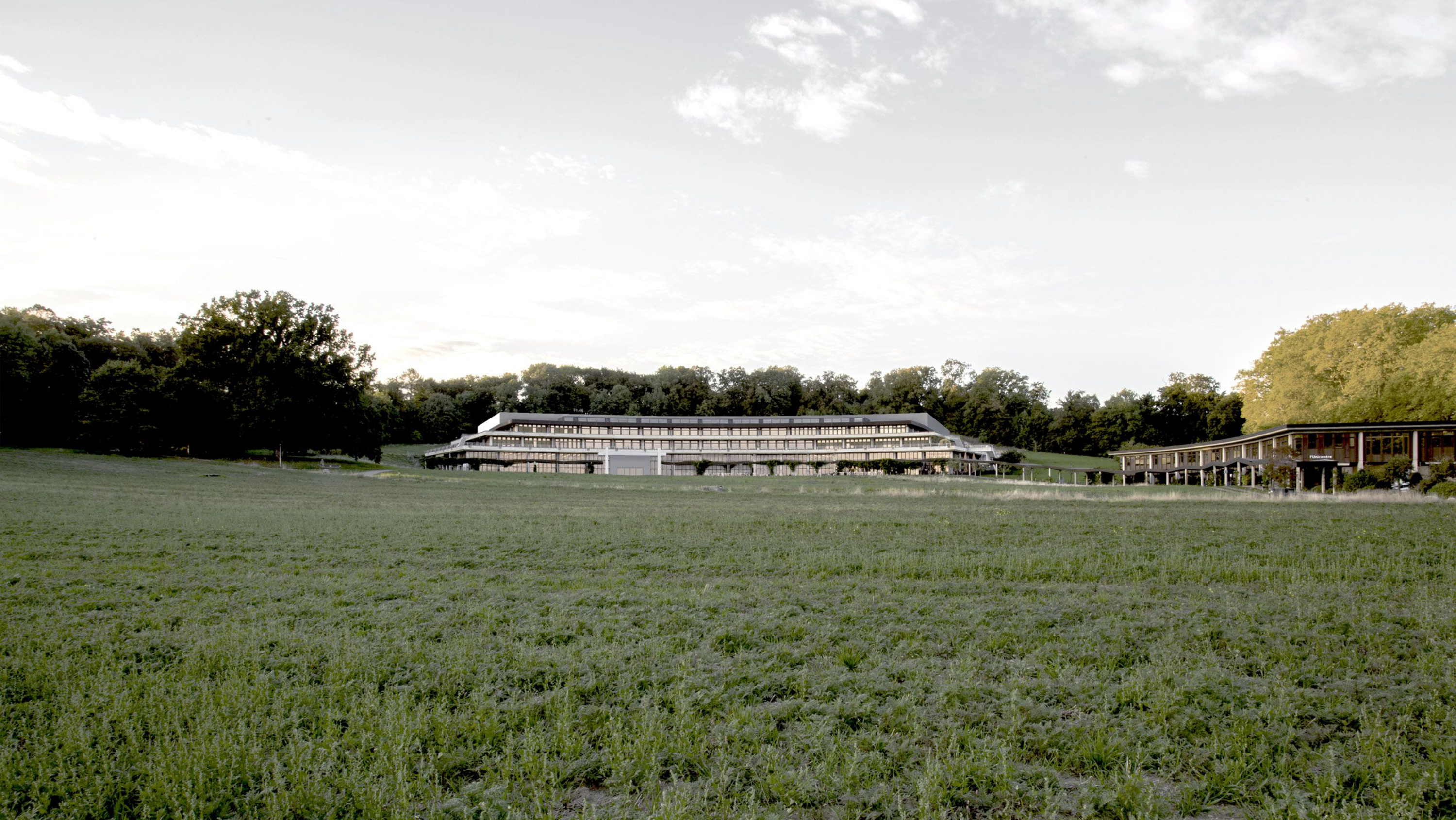
The “Unithèque” university library, which opened in 1983, is one of four buildings designed by Guido Cocchi for the Dorigny campus of the University of Lausanne. The steadily growing number of students made an extension necessary. At the same time, various archive facilities are consolidated at the Unithèque site.
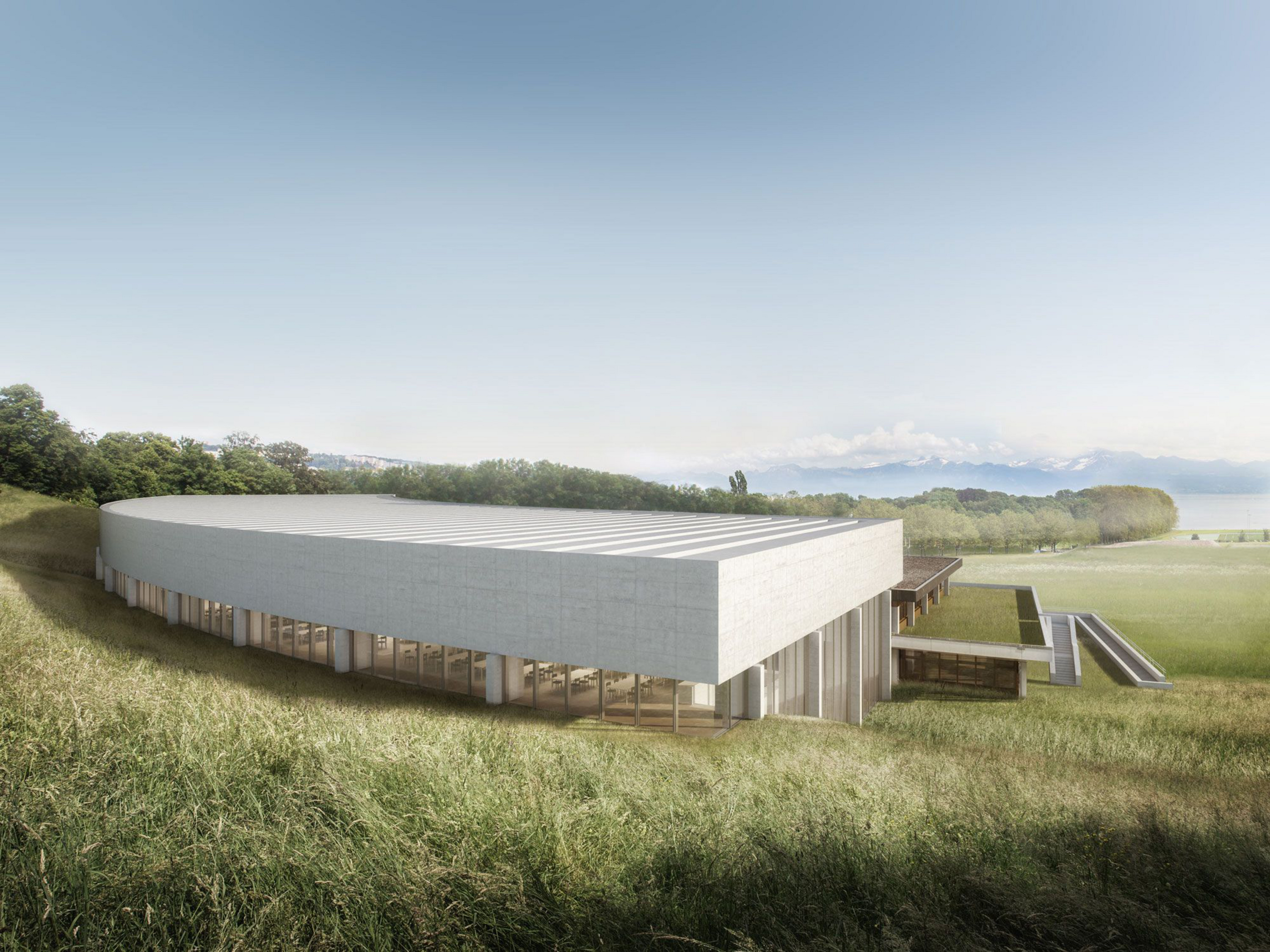
The winning project by FHV Architectes develops the existing building further and is organized into two main parts: the existing structure and the extension. The extension adds three subterranean levels and continues key principles of the original building, including the radial floor plan, the integration into the topography, and the use of concrete. This continuity results in a cohesive built form that links old and new.
Targeted interventions are carried out in the existing structure, affecting both the load-bearing system and circulation. The extension is directly connected and organizes new spaces and archive areas within a structure closely coordinated with the existing building. The construction process is phased to ensure continuous operation of the library and uninterrupted access to archive holdings.
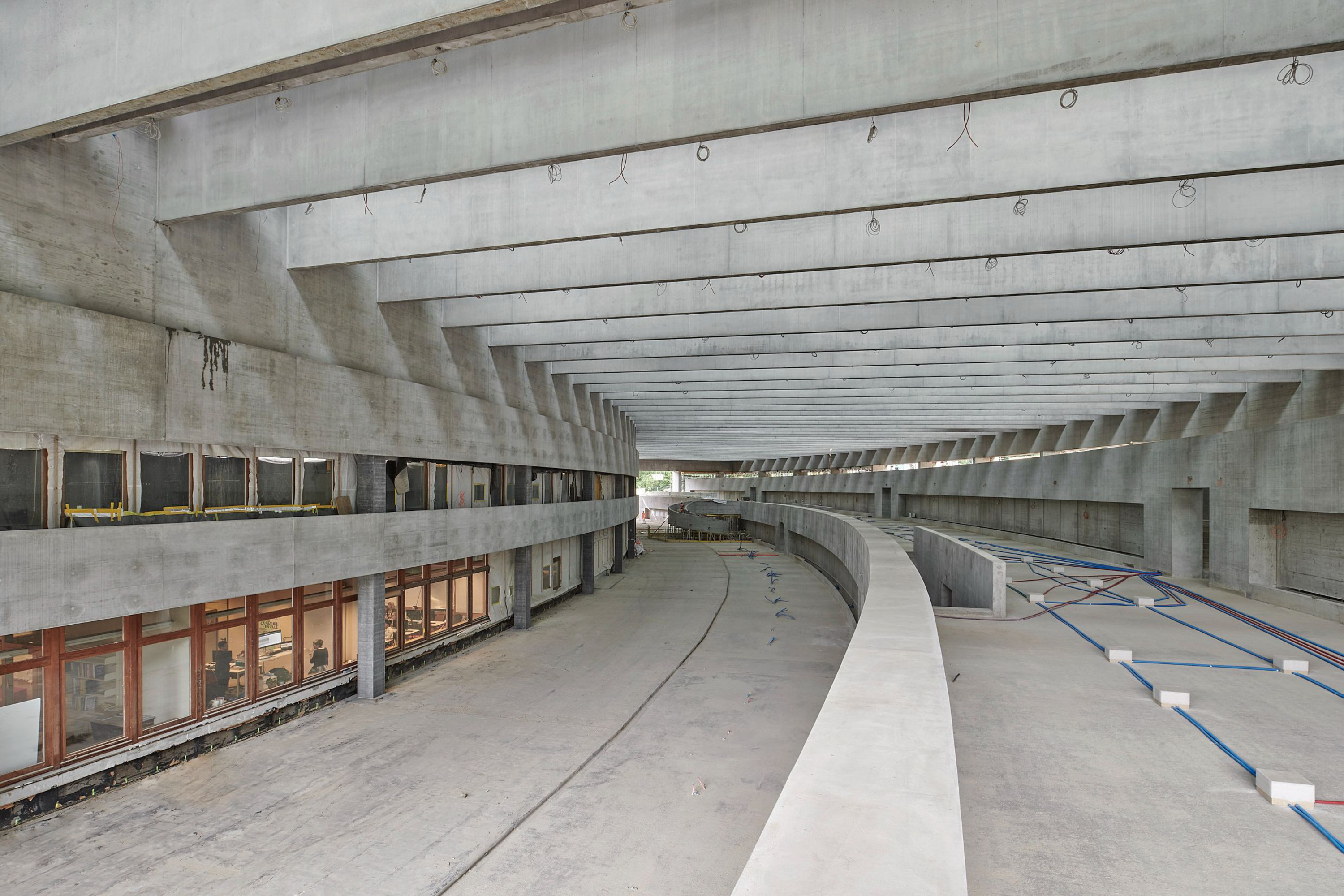
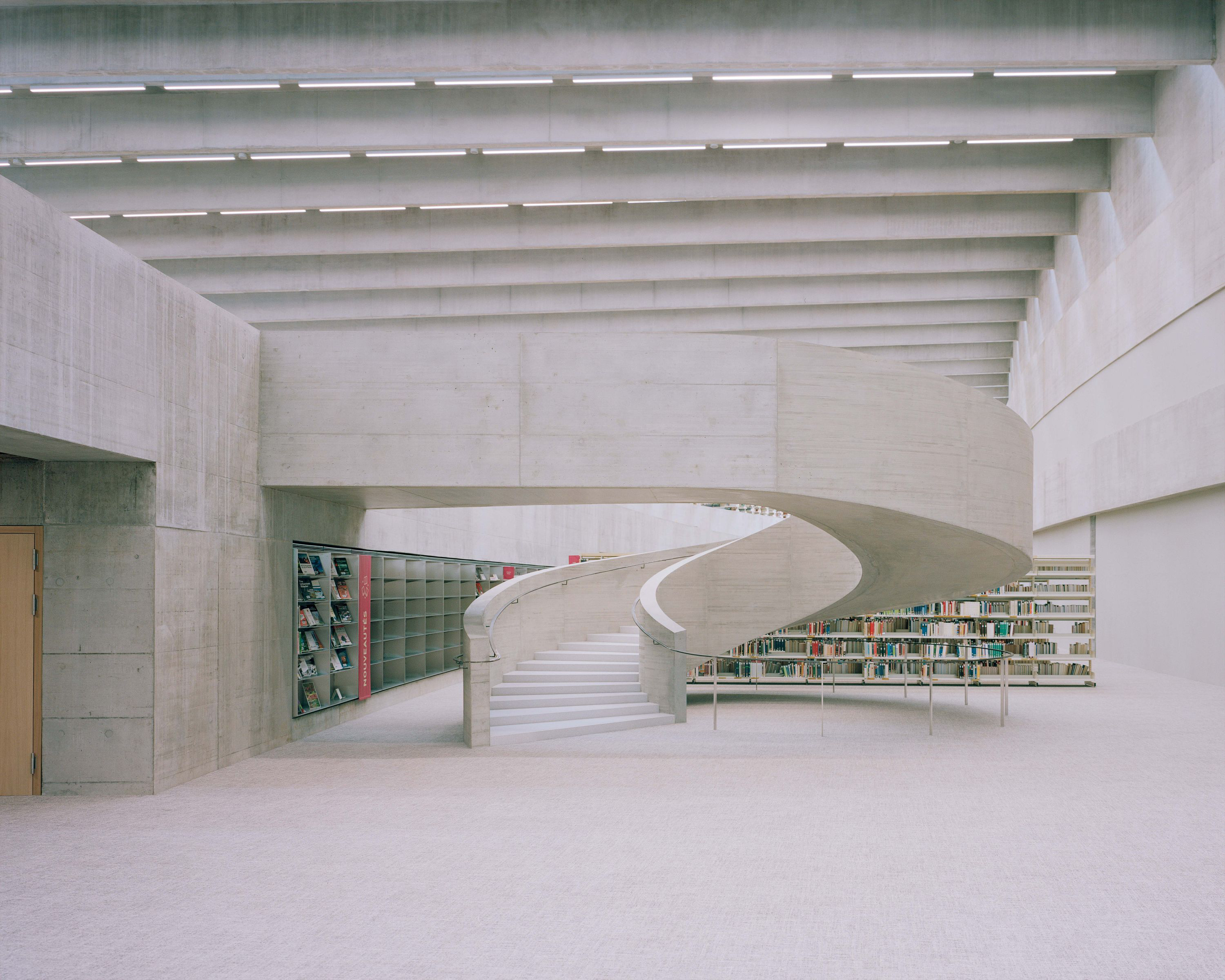
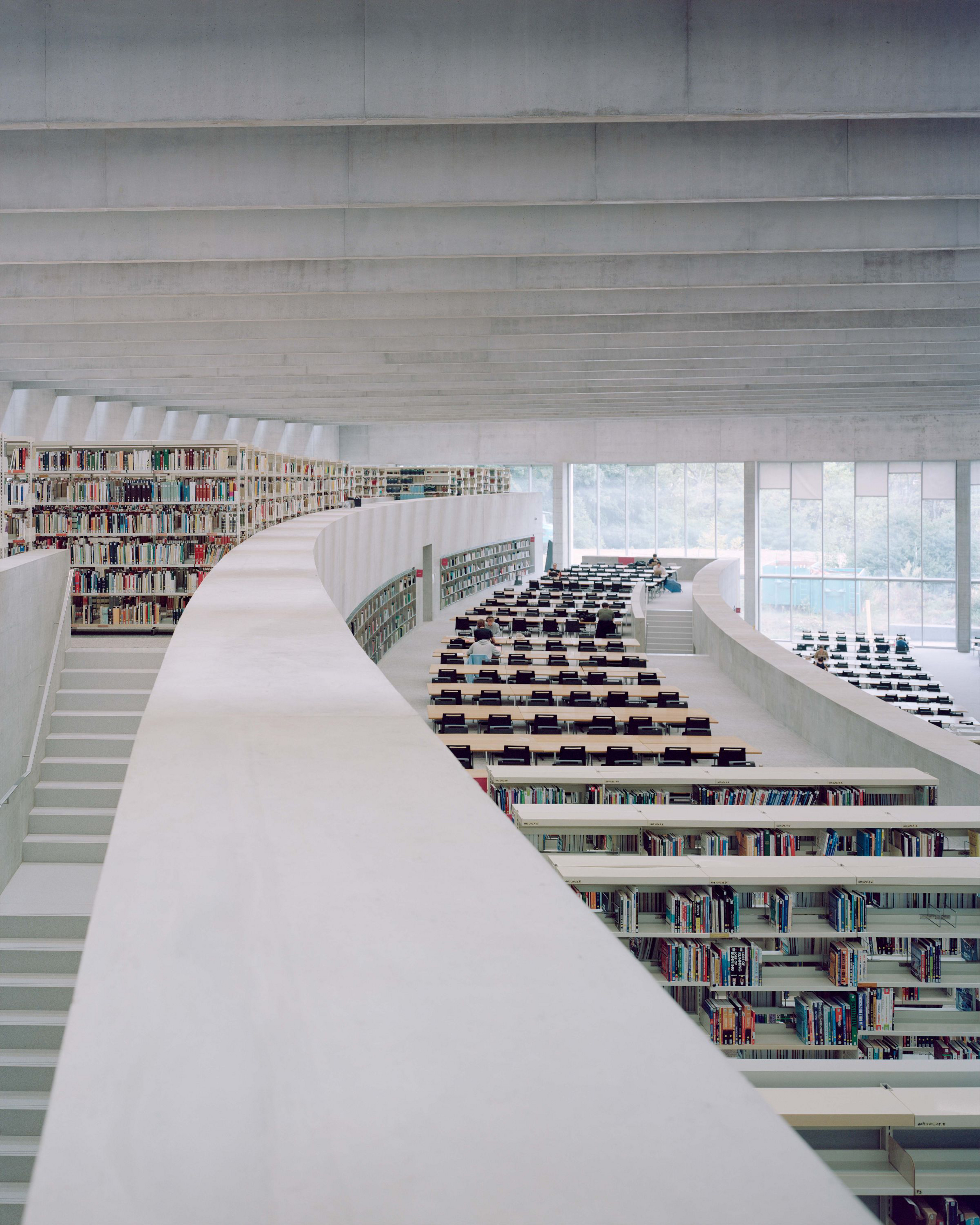
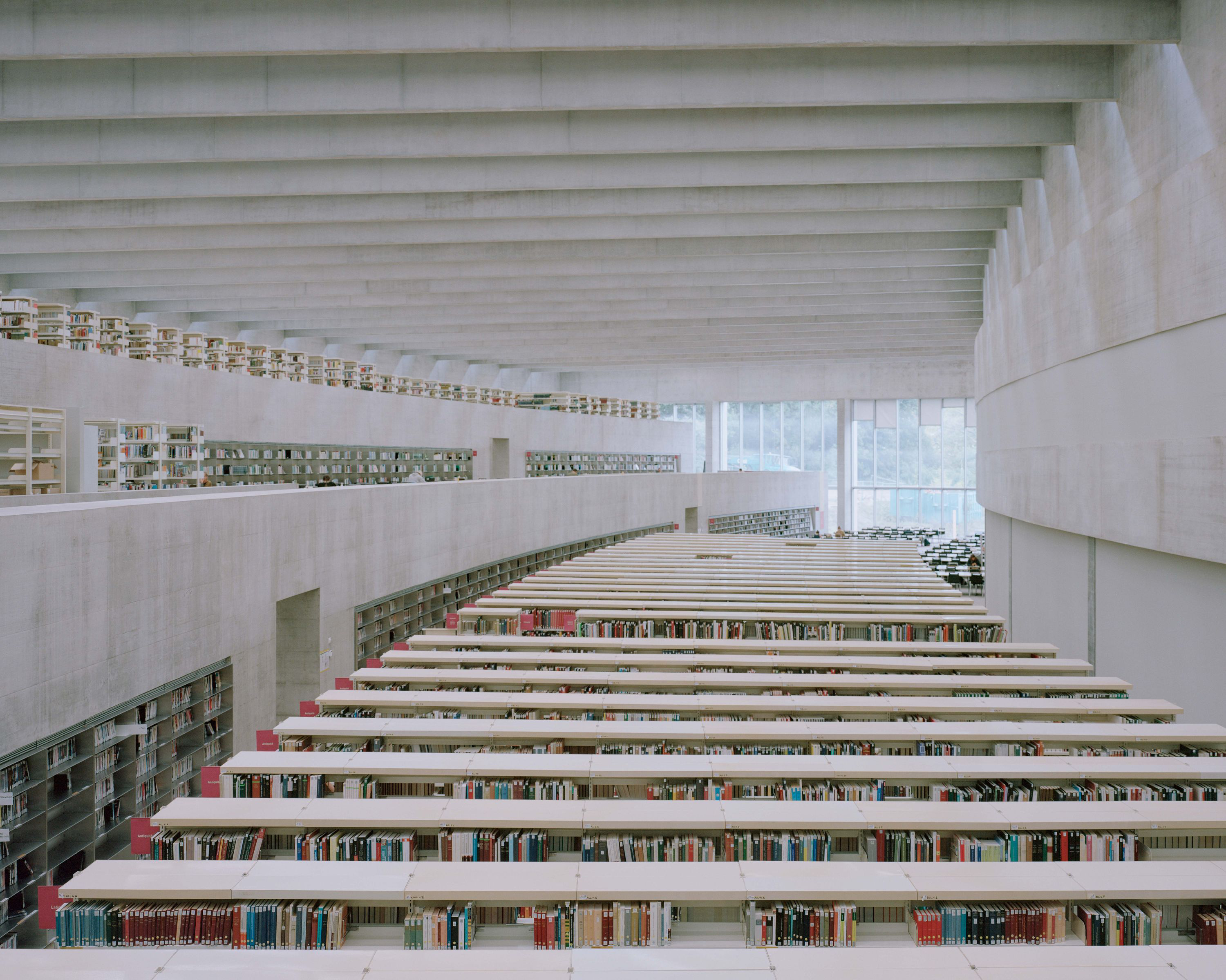
The load-bearing system of the extension is defined by a large-span roof structure forming a column-free reading room. It consists of 40 prestressed concrete girders spanning more than 34 meters, arranged in a radial configuration. Their folded geometry continues the underlying plan geometry while channeling indirect daylight into the interior. The structural performance results from the combination of effective depth, prestressing, and low reinforcement content.
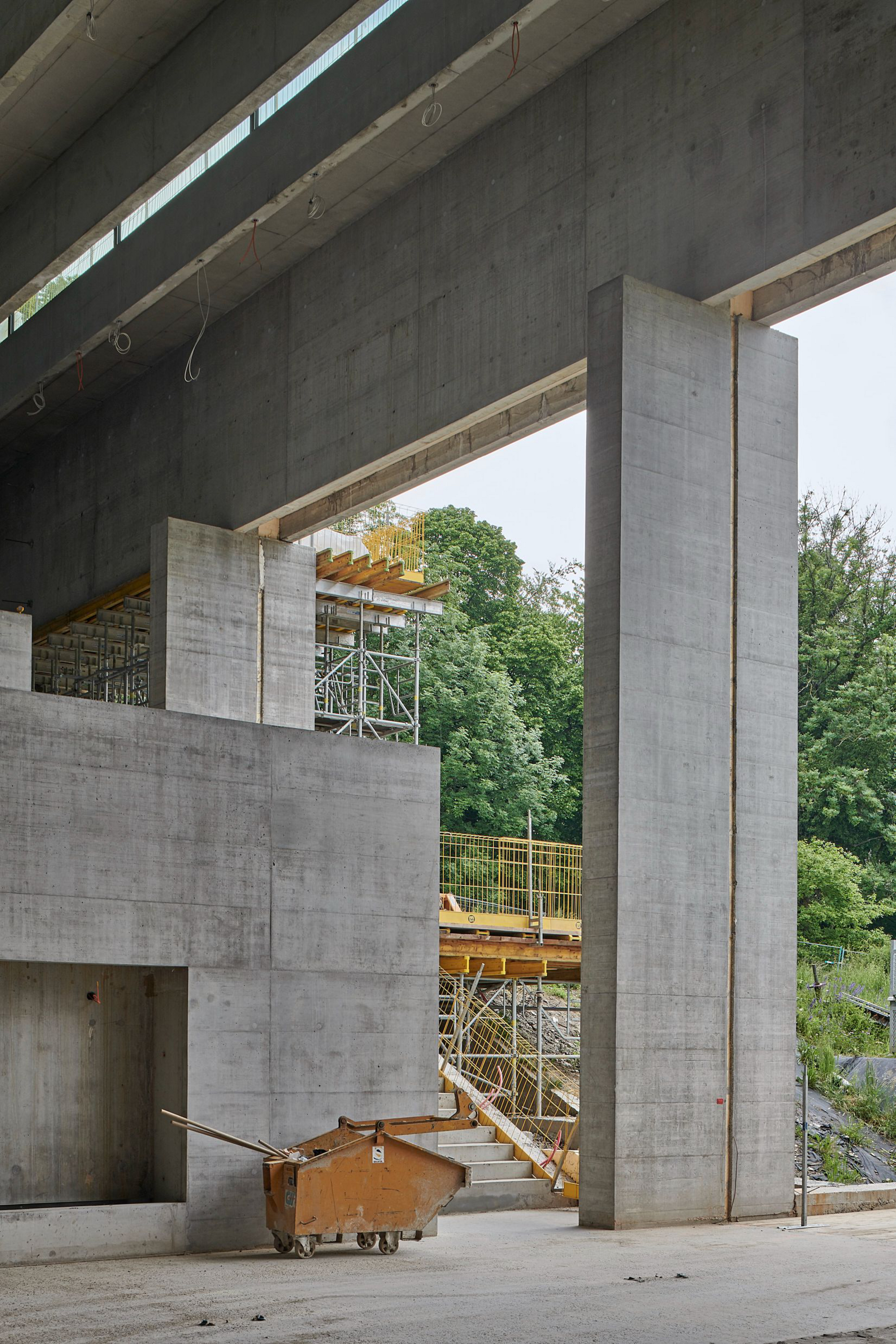
The girders bear on a peripheral cast-in-place concrete edge beam that transfers both vertical and horizontal forces. Anchored to it is the joint-free exposed concrete facade, which rests on sliding bearings and accommodates deformations caused by creep, shrinkage, and temperature effects. The roof and edge structures were executed in numerous precisely coordinated casting sequences.
At the interface with the existing building, loads are transferred via wall-like structural elements into the existing structure and the subsoil. To enable the new load-bearing system, parts of the existing prestressed ribbed slabs and columns were removed and replaced in stages. The foundations were reinforced with steel sections and micropiles while preserving the archive areas below. High imposed loads and strict deformation limits for compact shelving systems were addressed through the structural design.
Following completion, the existing building and the extension will form a continuous workscape across several terraced levels, maintaining and extending the spatial and structural logic of the original building.
PUBLICATIONS
 FHV Architectes
 Daniela & Tonatiuh
 Daniela & Tonatiuh
 Rasmus Norlander
 Rasmus Norlander
 Rasmus Norlander
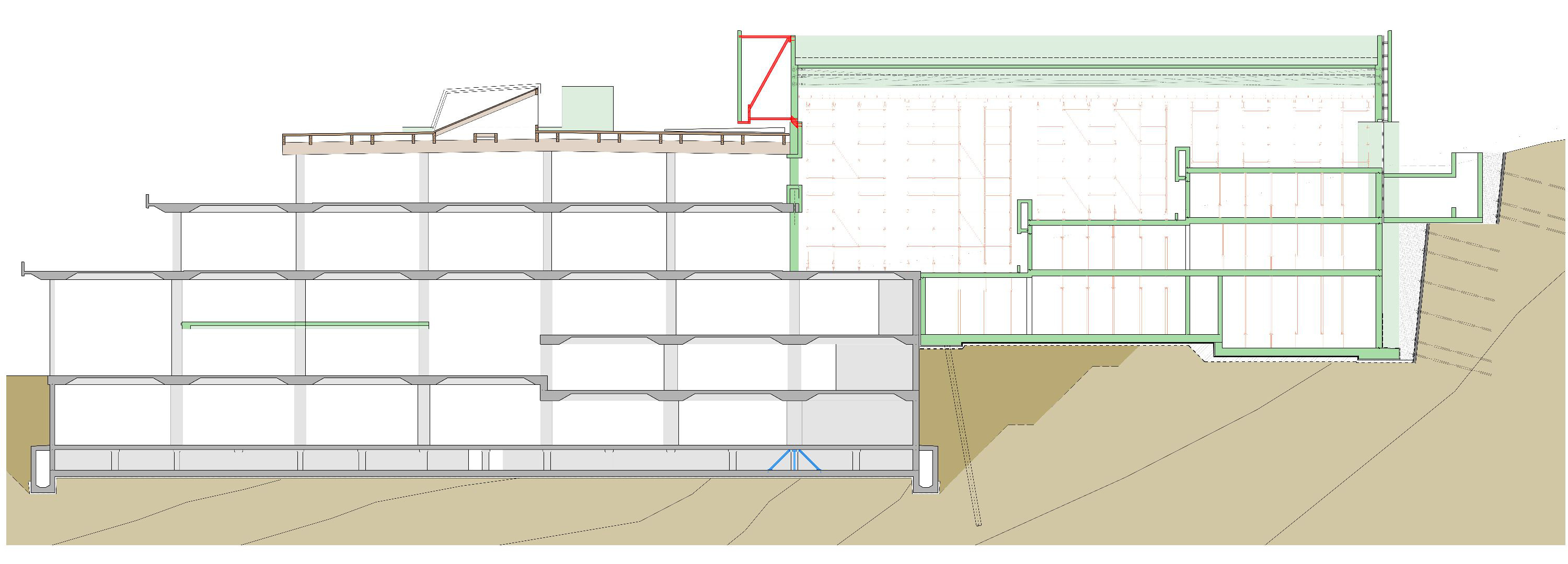 Schematic cross-section: new (green), shoring (red), reinforcement of existing foundation (blue), backfill of existing building (dark brown).
Schnetzer Puskas Ingenieure
Schematic cross-section: new (green), shoring (red), reinforcement of existing foundation (blue), backfill of existing building (dark brown).
Schnetzer Puskas Ingenieure
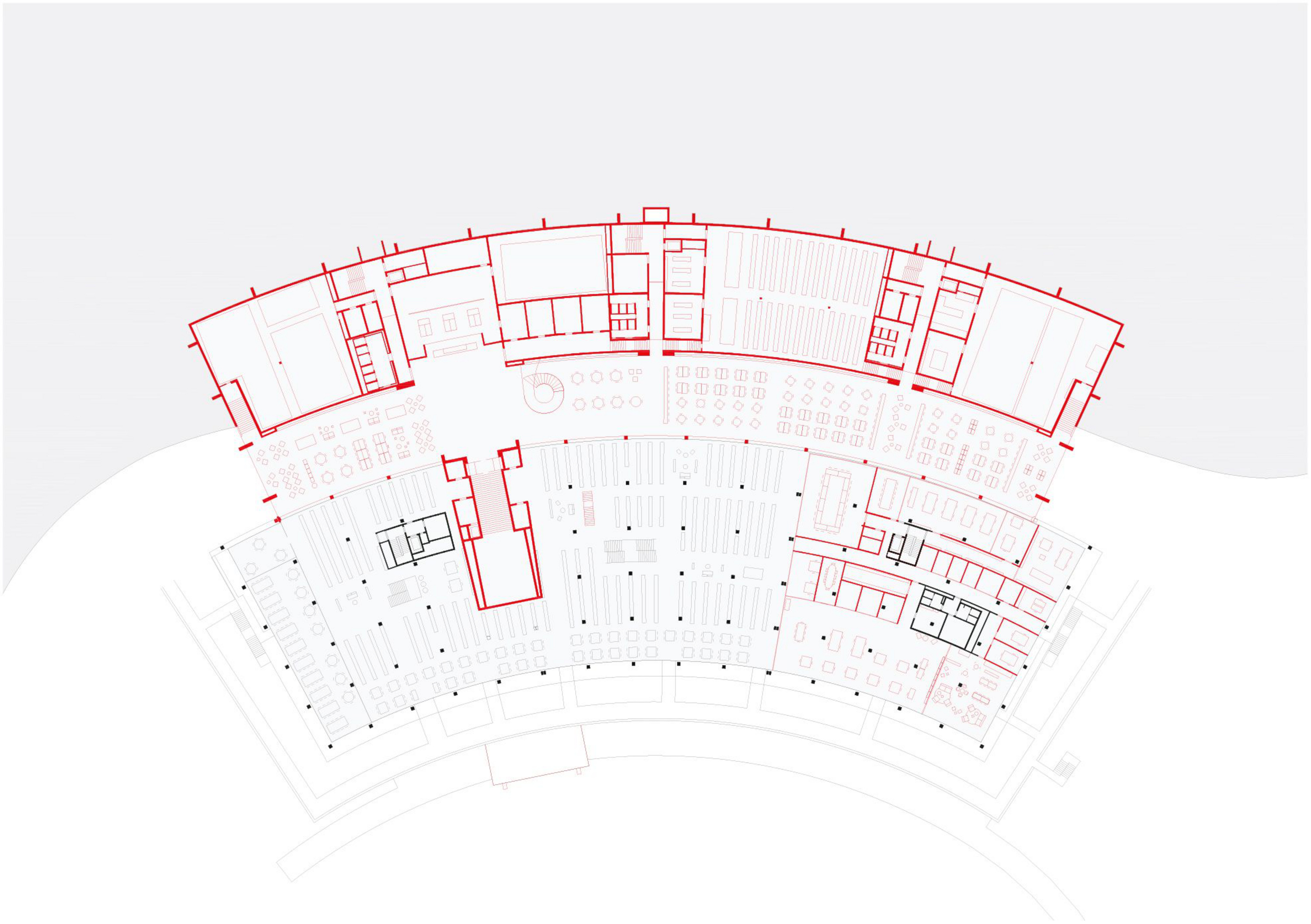 Floor plan of Level 3.
FHV Architectes
Floor plan of Level 3.
FHV Architectes
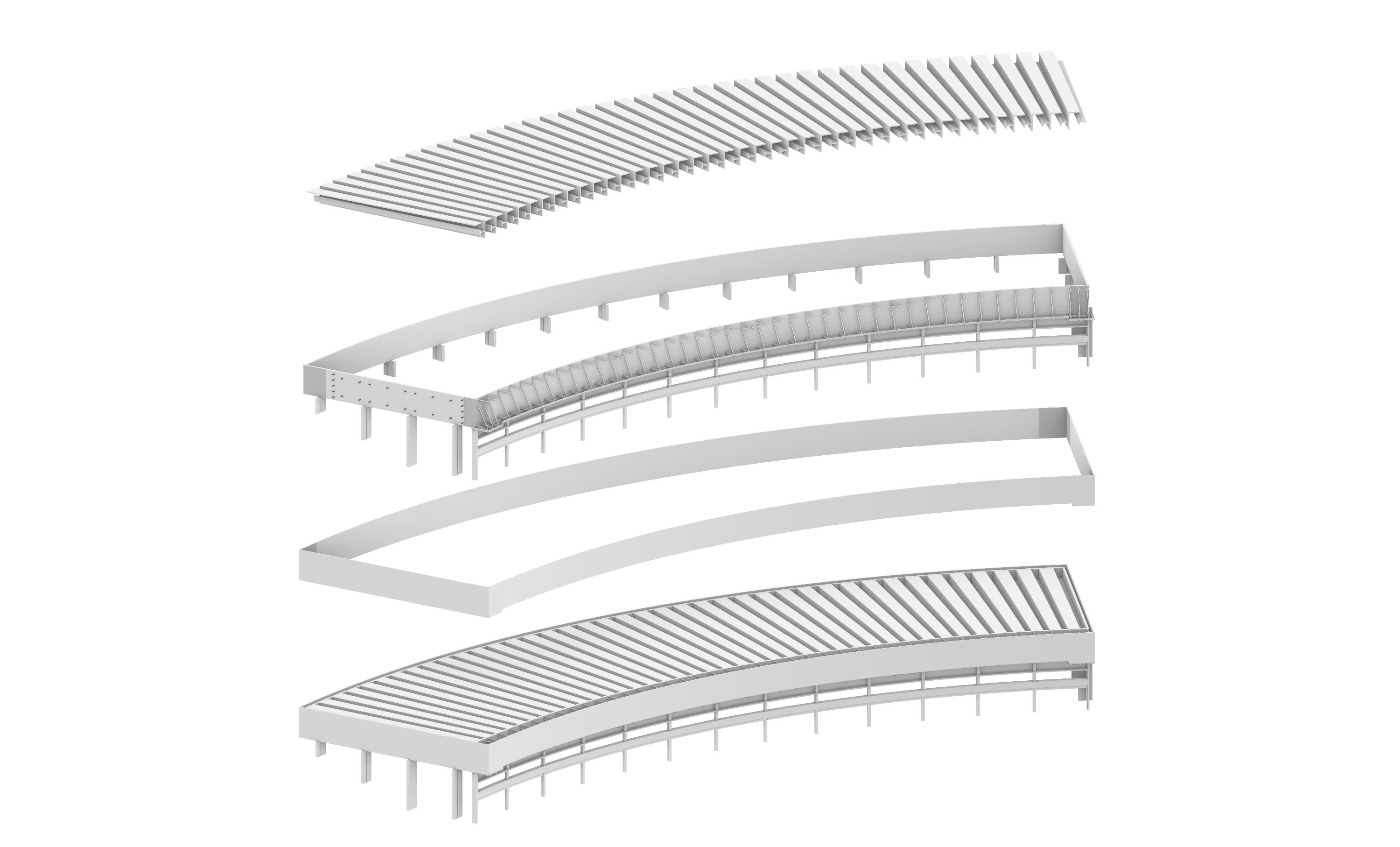 Structural system for the roof of the extension.
Schnetzer Puskas Ingenieure
Structural system for the roof of the extension.
Schnetzer Puskas Ingenieure
 FHV architectes
 FHV architectes
| Client | Canton de Vaud, represented by COPIL des Constructions Universitaires |
| Construction | Pragma Partenaires |
| Architecture | FHV Architectes |
| Planning | 2015 - 2019 |
| Realization | 2019 - 2027 |
| Status | Under construction |